
Why No One Talks About Pelvic Floor Health
(But Everyone Should)
Let’s be honest for a second…
Pelvic floor health isn’t exactly something people bring up over coffee. It is one of those topics that quietly gets pushed aside, even though it affects so many of us, both men and women.
And the thing is, ignoring it does not make it go away.
Whether it is a slight loss of control, reduced core strength, or just not feeling as confident in your body as you used to, your pelvic floor may be playing a bigger role than you realise.
So… what is the pelvic floor?
Think of your pelvic floor as a group of muscles that sit at the base of your pelvis. They help support important functions in your body, from bladder control to core stability and overall strength.
When these muscles are working well, you do not really notice them. But when they are not, that is when things can start to feel off.
Signs your pelvic floor may need attention
Not sure if this applies to you? Here are a few common signs people experience:
- Occasional bladder leaks, especially when coughing, laughing, or exercising
- A feeling of weakness in your core
- Reduced control or confidence in everyday movement
- Changes after pregnancy or childbirth
- A general sense that your body does not feel as strong as it used to
For men, it can also relate to:
- Challenges with core stability
- Changes in control or performance
These experiences are more common than people think. They are just not often talked about.
Why don’t people talk about it?
Simple answer? It feels uncomfortable.
There is still a stigma around pelvic health, and many people assume it is something they just have to live with, especially as they get older or after major life changes like pregnancy.
But the reality is a little different.
It is not always something you simply have to accept, and you are definitely not the only one experiencing it.
Can’t I just do Kegels?
You’ve probably heard this before: “Just do your Kegels.”
And while that may help in some cases, the reality is:
- Many people aren’t sure if they’re doing them correctly
- It can be difficult to stay consistent
- Results may take time (or feel unclear)
That’s why some people explore more guided or assisted approaches.
A more modern approach to pelvic floor care
This is where newer, non-invasive treatments come in, offering a different way to support pelvic floor health.
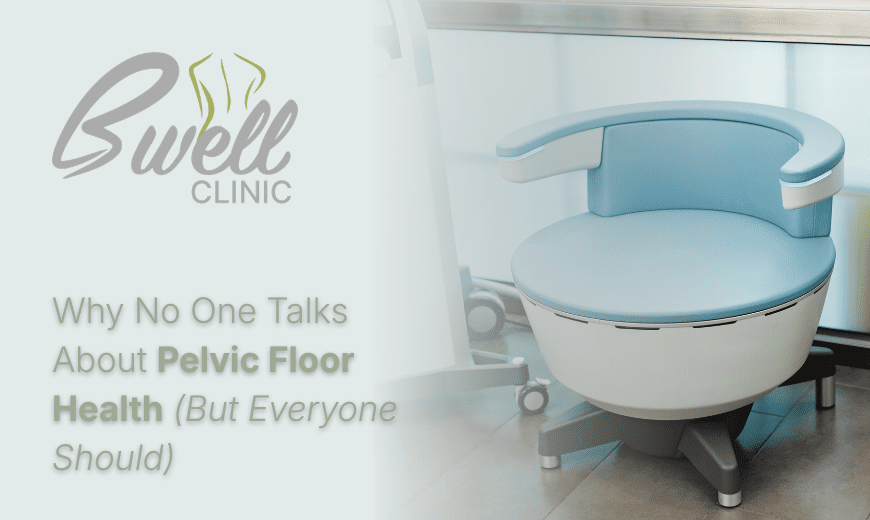
Instead of trying to do everything manually, some therapies use advanced technology to stimulate the muscles for you, like the pelvic floor treatment offered at BWell Clinic..
In a typical session:
- You remain fully clothed
- You sit comfortably
- The treatment may trigger thousands of muscle contractions in a short period
The idea is to help activate and engage muscles in a way that may be difficult to achieve on your own.
In some cases, people also explore supportive treatments that focus on circulation, muscle activation, and overall body function, such as fascia blasting or microcurrent body sculpting.
Is it just for women?
Not at all, and this is where many people are surprised.
Pelvic floor health matters for both men and women.
For women, it may be helpful for:
- Recovery after pregnancy
- Regaining strength and control
- Improving overall confidence
For men, it may be beneficial for:- Supporting core strength
- Improving control
- Enhancing overall wellness
It is really about supporting your body in a way that feels right for you.
What kind of results can you expect?
Everyone’s body is different, so experiences can vary.
Some people may notice:
- A stronger sense of control
- Improved awareness of their core
- A boost in overall confidence
And for many, it’s simply about feeling more comfortable in their own body again.
Why this matters more than you think
Pelvic floor health is not just about one symptom. It is connected to how you move, how you feel, and how confident you are in your daily life.
It is one of those things that, once improved, people often wish they had looked into sooner.
FAQ
What is pelvic floor therapy?
Pelvic floor therapy focuses on strengthening the muscles at the base of your pelvis. These muscles play a role in bladder control, core stability, and overall confidence.
Some treatments use advanced technology to stimulate these muscles, which may help improve strength and awareness over time.
Who is pelvic floor therapy for?
Pelvic floor therapy may be beneficial for both men and women.
It is often explored by people who:
- Experience bladder leaks
- Feel a lack of core strength
- Have gone through pregnancy or childbirth
- Want to improve overall control and confidence
How does the pelvic floor chair work?
The treatment involves sitting comfortably, fully clothed, while the chair delivers targeted muscle stimulation.
This may trigger thousands of muscle contractions in one session, helping to activate muscles that can be difficult to engage on your own.
Is the treatment painful?
Most people describe the sensation as unusual at first, but not painful.
You may feel your muscles contracting, similar to exercise, but without the physical effort.
How many sessions will I need?
This can vary depending on your body and your goals.
Some people may notice changes after a few sessions, while others may benefit from a full treatment plan over time.
Can I combine this with other treatments?
Yes, many people choose to combine pelvic floor therapy with other treatments, depending on their goals.
This may include options that focus on:
- Muscle tone
- Circulation
- Body contouring
A personalised approach is usually recommended.
How quickly will I see results?
Results can differ from person to person.
Some individuals may notice improvements in awareness and control fairly early, while for others it may take a few sessions to feel a difference.
Ready to take the next step?
If any of this sounds familiar, it may be worth exploring your options in a supportive and professional environment.
At BWell Clinic, treatments are tailored to your individual needs, with a focus on comfort, discretion, and real results.
Book your consultation today to discover which treatments are right for you and start your pelvic care journey.
Address
- 384 Lois Ave, Waterkloof Glen, Pretoria, 0010
- Mon-Fri: 9am – 5pm

© 2026 BWell Clinic Waterkloof. All rights reserved.